How a mixed-methods investigation into unexpectedly low product adoption uncovered usability and discoverability barriers, enabling the team to prioritise 13 product improvements without consuming scarce enterprise customer research capacity.
A newly launched product area was seeing significantly lower adoption than expected, and the obvious explanations didn't hold up.
Product stakeholders believed awareness campaigns, previous customer research and engineering QA had already addressed the most likely explanations, leaving uncertainty around why customers were failing to engage. Rather than immediately interviewing customers, I developed a research strategy that first exhausted existing behavioural evidence, triangulating analytics, session recordings, heuristic evaluation, prior research and Customer Success knowledge to identify the barriers explaining the majority of user drop-off.
My role
As the sole User Researcher, I planned and led the investigation end-to-end: defining the strategy, executing mixed-methods research, and presenting recommendations that shaped the product roadmap.
Impact
13 research recommendations were accepted into the roadmap, identified without spending a single customer interview from an already scarce enterprise pool.
My initial chat with the PM on a new piece of work.
Hashing out the brief, meeting stakeholders, signing off on objectives, and recruiting.
Running interviews, testing sessions, and other data collection.
Coding, triangulating, and turning raw data into insights.
This is the decision-making phase, when deliverables and action items are shared with stakeholders.
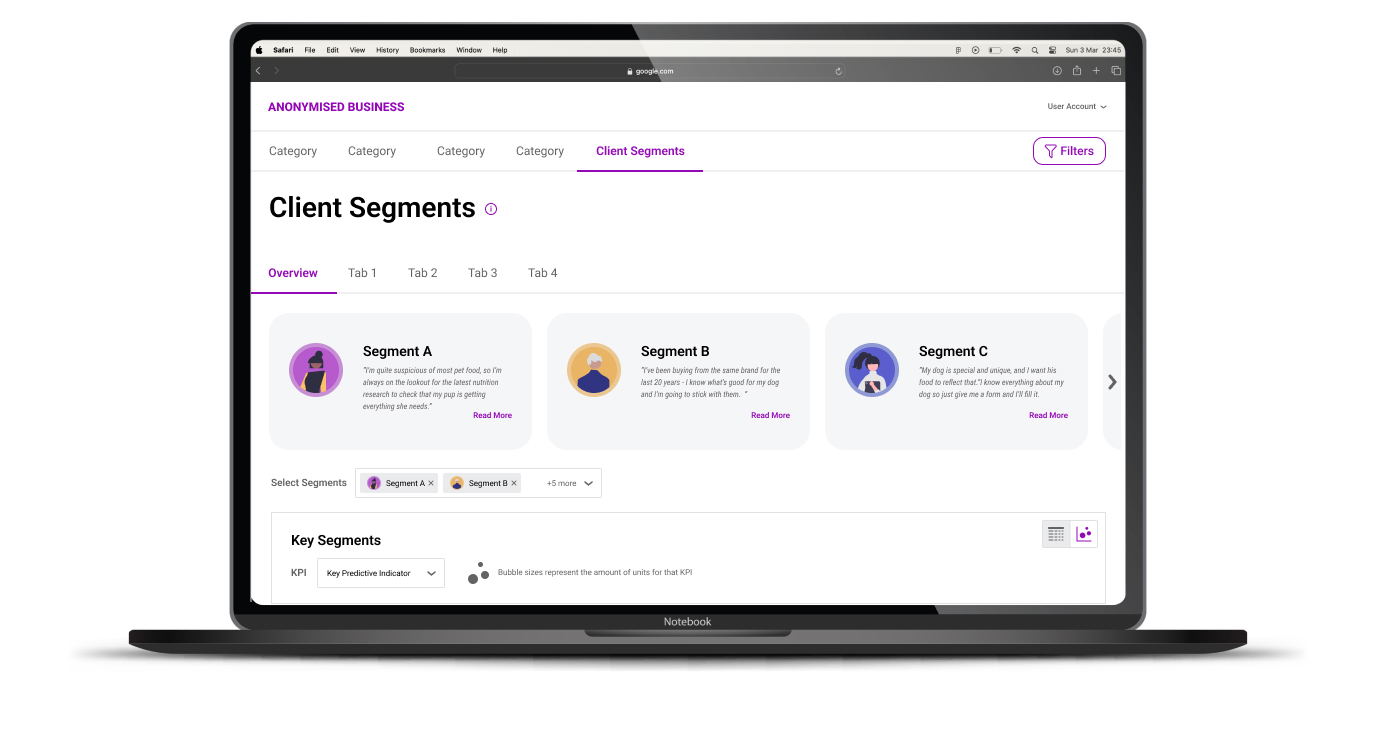
A global market intelligence company had recently launched a new product area within its enterprise analytics platform, designed to help customers understand behavioural audience segments.
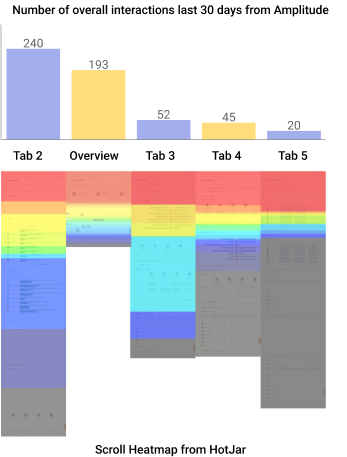
Several months after launch, however, product analytics revealed that adoption and engagement were considerably lower than anticipated. Although customers occasionally visited the product, usage dropped sharply beyond the first few pages, and several areas showed some of the lowest engagement across the wider platform.
The available evidence only told us what was happening, not why. It couldn't explain whether this reflected a lack of customer need, poor discoverability, usability issues, performance problems, or something else entirely. Rather than accepting or rejecting the team's assumptions, I treated them as hypotheses to validate.
My role
I was the sole User Researcher responsible for planning and leading the investigation end-to-end, defining the research strategy, executing mixed-methods research, and presenting recommendations to product, design and engineering stakeholders.
Confidentiality note
This case study is based on real work, but company and product names have been generalised, and supporting visuals adapted, to protect confidential information.
Stakeholder Alignment
Before selecting research methods, I worked with the Lead Product Manager to understand the broader context behind the request and the assumptions already influencing product decisions.
The research sought to answer two complementary questions: how to increase adoption, and why customers weren't engaging with it in the first place.
(A fourth question, how customers used the product's insights within their wider workflow, was proposed by the PM but scoped out early. It didn't fit the research's constraints, and building an intercept survey for a low-traffic, low-adoption feature just to answer it wasn't worth the cost.)
...identify consistent behavioural patterns behind low adoption, determine whether existing evidence was sufficient to explain them, and let the team prioritise improvements by confidence rather than assumption.
Investigation Principles
Three principles guided the investigation: start with existing evidence before asking customers for more of their time; prioritise scarce enterprise access, since each participant entered a six-month cooldown after taking part in research; and focus on actionable outcomes: clear, evidence-based recommendations the team could act on in the next planning increment, not just a list of usability issues.
Methodology
Analysed 3 months of behavioural metrics in Amplitude to establish the scale of the problem and pinpoint where users dropped off.
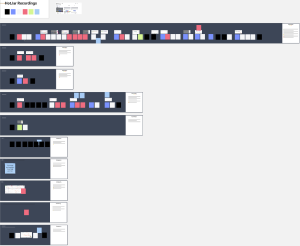
Reviewed ~3 months of recordings with the Junior PM, independently documenting friction before consolidating observations.
The PM and I separately evaluated the product against usability heuristics to reduce bias before comparing findings.
Informal interviews with 5 Customer Success Managers to surface context analytics alone couldn't explain.
Why We Didn't Interview Customers
Our enterprise customer base was small, and every participant entered a six-month cooldown after taking part in research, so I chose not to spend that scarce access on a problem existing evidence might already explain.
Ordinarily, direct customer conversations would have been the natural next step. But at the time, I was leading several strategic discovery projects that genuinely depended on direct customer access.
Using those limited research opportunities to investigate a problem that could potentially be explained through existing behavioural evidence would have reduced our ability to answer higher-risk product questions elsewhere.
Tools
Rather than treating each research activity independently, I triangulated findings across all evidence sources to identify recurring themes. Only issues supported by multiple methods were prioritised as recommendations, distinguishing isolated usability issues from systemic barriers affecting adoption, and keeping every recommendation grounded in converging evidence rather than individual observations.
Several visualisations took 10–20 seconds to load, long enough to break users' flow and empty entire pages before they ever reached the insights they came for.
No single method explained the adoption problem on its own, but together, they built a case the team could act on with confidence.
Users struggled to understand the value proposition. Low onboarding completion rates and frequent use of help content suggested people were unclear about what the product offered and how to use it.
The product sat outside users' natural workflow. Behavioural evidence and Customer Success feedback showed customers were already finding similar information elsewhere in the platform, making the standalone product easy to bypass.
Navigation and page structure disrupted exploration. Session recordings showed users abandoning the experience after a handful of pages, with navigation disappearing while scrolling.
Data visualisation increased cognitive effort. Analytics and heuristic evaluation surfaced inconsistencies between graph labels, filters and chart behaviour that made comparisons unnecessarily hard.
Performance interrupted analysis. Several visualisations took 10–20 seconds to load, and HotJar recordings showed customers repeatedly dropping off when graphs failed to load and pages looked empty.
What began as a straightforward adoption problem became evidence of a systemic discoverability and usability gap, one the team could address without touching the scarce enterprise interview pool.
The research also surfaced follow-on questions worth investigating: 13 recommendations were accepted into the roadmap for the next planning increment, and the work triggered further research into onboarding and the wider customer journey.
Synthesised insights and recommendations
Immediate, low-effort improvements the team could ship within the current increment:
Bigger, higher-effort opportunities to address the root cause:
This project reinforced that customer interviews should not always be the starting point. By deliberately exhausting existing behavioural evidence first, we answered the immediate product questions while protecting a limited enterprise participant pool for future discovery work.
It also demonstrated the value of triangulation. No single method explained the adoption problem on its own, but together they produced a clear, evidence-based picture that let the team move forward with confidence.
How I'd approach this today
I'd follow the same evidence-first strategy, but use AI to accelerate research operations: clustering behavioural observations from session recordings, speeding up heuristic analysis, synthesising secondary research, and spotting patterns across evidence sources faster. That would free up more time for validating insights with stakeholders and shaping product decisions.
Please feel free to send me a message for new opportunities, mentorship, connections, or simply to chat about UX!